
What is Compound Interest? How Your Money Makes Money
If you’ve ever heard someone say “let your money work for you,” they were probably talking about compound interest. It’s one of the most powerful ideas in personal finance, yet most people never had it explained in a simple way. This guide breaks it down without the confusing textbook language.
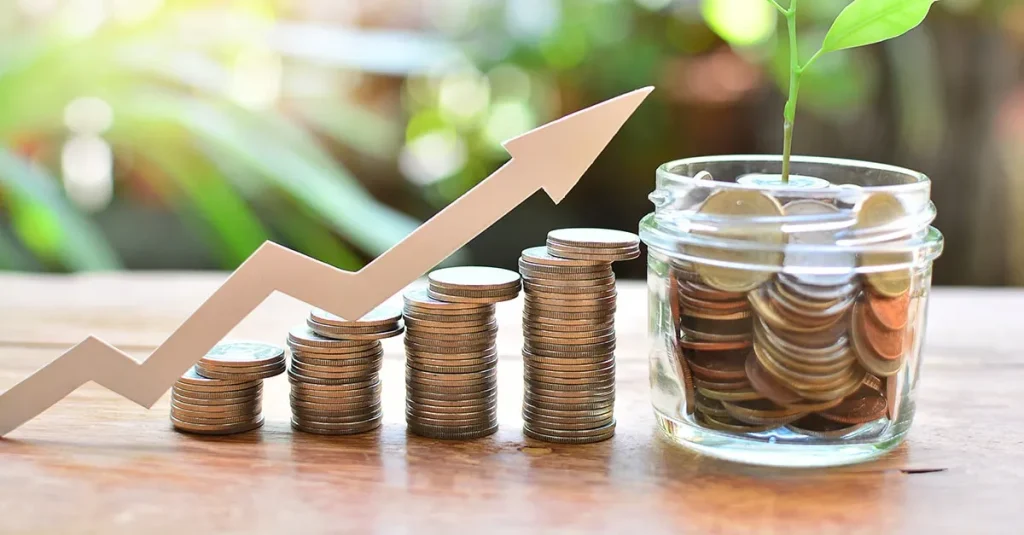
The Simple Definition
Compound interest is interest earned on both your original money and on the interest that money has already earned.
Think of it like a snowball rolling down a hill. It starts small, but as it rolls, it picks up more snow. That extra snow helps it pick up even more snow. The snowball doesn’t just grow it grows faster and faster the longer it rolls.
That’s compound interest. Your money doesn’t just earn interest once. It earns interest, then that interest earns its own interest, and so on. Over time, this creates growth that speeds up instead of staying flat.
Compound Interest vs. Simple Interest
To really understand compound interest, it helps to compare it with simple interest.
Simple interest is calculated only on your original amount (called the principal). If you put $1,000 in an account earning 5% simple interest per year, you earn $50 every single year no more, no less. Ten years later, you’d have earned $500 in total interest.
Compound interest is calculated on your principal plus any interest you’ve already earned. Using the same $1,000 at 5%, compounded yearly:
Notice how the interest amount keeps growing each year, even though the interest rate stayed the same. That’s the entire idea in action.
The Compound Interest Formula
If you like to see the math, here’s the standard formula:
A = P (1 + r/n)^(nt)
Where:
- A = the final amount (principal + interest)
- P = the principal (your starting amount)
- r = the annual interest rate (as a decimal, so 5% becomes 0.05)
- n = how many times interest is compounded per year
- t = the number of years
You don’t need to memorize this or do it by hand. Most banks and financial tools do this math instantly, which is exactly why online calculators exist you can plug in your numbers and see the result in seconds instead of working through the formula yourself.
Why Compounding Frequency Matters
Not all compound interest grows at the same speed, even at the same interest rate. The frequency of compounding how often the interest gets added to your balance makes a real difference.
Common compounding schedules include:
The more often interest compounds, the faster your money grows, because each compounding period adds a little more to the balance that future interest is calculated on. The difference between annual and daily compounding isn’t huge in year one, but over 10 or 20 years, it adds up to a noticeably larger balance.
A Real-World Example
Let’s say you deposit $5,000 into a savings product earning 4.5% interest per year, compounded monthly, and you leave it alone for 10 years.
That’s nearly $2,827 in growth without you adding a single extra dollar. The only “work” you did was leaving your money in place and letting time and compounding do the rest.
Now compare that to simple interest at the same rate over the same period; you’d only earn $2,250 total, a difference of over $500. That gap only gets wider the longer your money sits and grows.
The Rule of 72: A Quick Mental Shortcut
Want to estimate how long it takes for your money to double without doing the full formula? Use the Rule of 72.
Just divide 72 by your annual interest rate:
72 ÷ interest rate = years to double
For example, at a 6% interest rate: 72 ÷ 6 = 12 years to double your money.
At a 4% rate: 72 ÷ 4 = 18 years.
It’s not perfectly exact, but it’s a handy way to get a quick estimate in your head without a calculator.
Where You’ll See Compound Interest in Real Life
Compound interest isn’t just a textbook concept it shows up in everyday financial products:
This is exactly why understanding compounding matters both for growing savings and for avoiding debt that grows faster than expected.
Compound Interest and CDs
Certificates of Deposit are one of the clearest, lowest-risk ways to see compound interest at work. When you open a CD, you agree to leave your money untouched for a set term anywhere from a few months to several years in exchange for a fixed interest rate that compounds over that term.
Because the rate is locked in and the term is fixed, CDs make it easy to know exactly how much your money will grow, with no guesswork. Instead of doing the math by hand, you can use a cd calculator to enter your deposit amount, interest rate, term length, and compounding frequency, and instantly see what your CD will be worth at maturity.
learn more: Types of CDs Explained
Common Mistakes People Make With Compound Interest
- Withdrawing early — Taking money out before it has time to compound resets your growth and can trigger penalties on products like CDs.
- Ignoring compounding frequency — Two accounts with the same interest rate can grow differently based on how often interest is compounded.
- Underestimating small amounts — Many people assume compounding only matters for large sums, but even small, consistent deposits grow meaningfully over time.
- Waiting too long to start — Since compounding accelerates over time, starting even one or two years earlier can make a noticeable difference in your final balance.
Why Compound Interest Matters More in 2026
With interest rates shifting over the past few years, more people are paying closer attention to where their savings sit. Choosing between a regular savings account, a high-yield account, or a CD often comes down to one thing: how compounding works for that specific product.
Understanding compound interest isn’t just financial trivia anymore it’s a practical skill for making smarter decisions about where to park your money, how long to lock it in for, and what kind of return to realistically expect.
Learn more: How to Open a Certificate of Deposit
Frequently Asked Questions
Final Thoughts
Compound interest is simple once you see it clearly: it’s interest earning interest, growing faster the longer you leave it alone. Whether you’re saving in a regular account, planning for retirement, or considering a CD, understanding how compounding works helps you make better decisions about where your money goes and how long to let it grow.


